01
Brackish salinity
Target range 1,500–20,000 ppm TDS. Recovery targets and system configuration depend on source chemistry and operating parameters.
SonixED™ is Hydrovolta’s core platform for difficult groundwater in the 1,500–20,000 ppm TDS range. It recovers more usable water, removes target ions selectively, and addresses the scaling dependencies that defeat conventional membrane systems in hard water and silica-laden sources.
Many brackish groundwater sources are technically and commercially viable — but not with conventional membrane systems. Silica fouling, variable salinity, high hardness, and brine disposal constraints compound in real operating conditions.
Target range 1,500–20,000 ppm TDS. Recovery targets and system configuration depend on source chemistry and operating parameters.
Silica forms amorphous deposits that chemical cleaning cannot remove once established. SonixED™’s acoustic cavitation prevents nucleation before it occurs.
Nitrate, sodium, fluoride, and chloride require targeted removal. SonixED™’s selective membrane removes target ions while retaining Ca²¹ and Mg²¹.
SonixED™ targets 2–5% residual brine in suitable applications — significantly less than conventional membrane treatment, reducing disposal burden and liability.
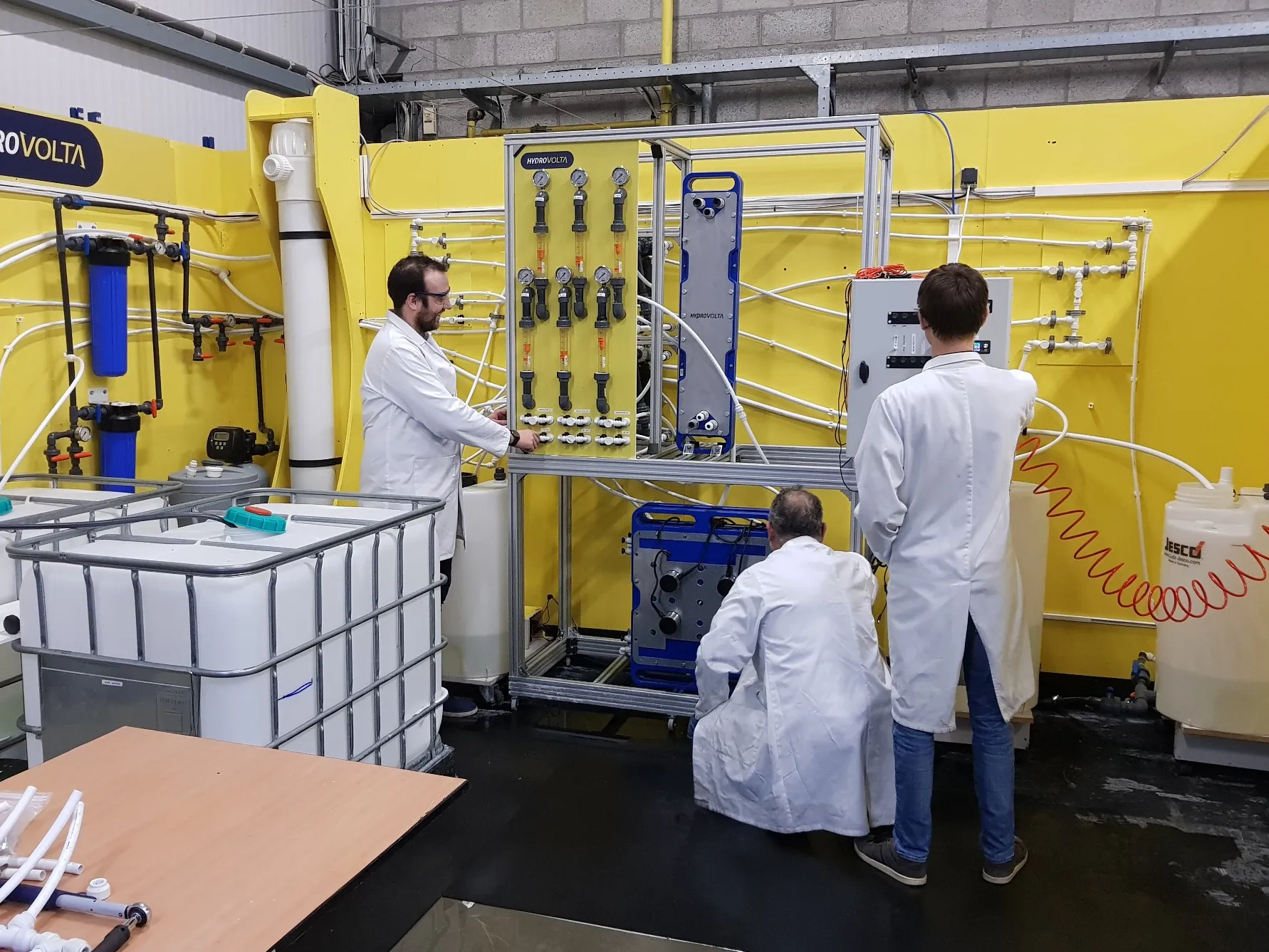
Three integrated mechanisms each addressing a specific failure mode of conventional treatment. Together they deliver a combination of recovery rate, scaling resistance, and ion selectivity that is not achievable with standard RO configurations for difficult brackish sources.
Performance claims are tied to real operating data from active deployments, not laboratory projections.


SonixED™ performs best in specific conditions. Hydrovolta qualifies every project honestly — including when a different technology is a better fit.
| Source characteristic | SonixED™ fit | Notes |
|---|---|---|
| TDS 1,500–20,000 ppm | Strong fit | Core operating range. Best economics vs RO at this TDS level. |
| High silica (>30 mg/l) | Strong fit | Ultrasound prevents silica fouling that defeats conventional membranes. |
| High hardness (Ca + Mg >300 mg/l) | Strong fit | CaCO₃ and MgSO₄ scaling controlled by acoustic cavitation. |
| Selective nitrate removal required | Strong fit | Validated at Water Corporation Perth. EU limit 50 mg/l NO₃¯ — deadline Dec 2027. |
| Inland site / no brine discharge | Strong fit | 2–5% brine fraction minimises disposal burden vs RO’s 25–50%. |
| TDS <1,500 ppm | Borderline | Conventional softening or nano-filtration may be more cost-effective. |
| Seawater (>35,000 ppm TDS) | Not primary use case | SWRO typically preferred. Hydrovolta focuses on the brine stream from existing SWRO. |
Not sure where your source falls? Send your water analysis → Hydrovolta will assess fit without obligation.
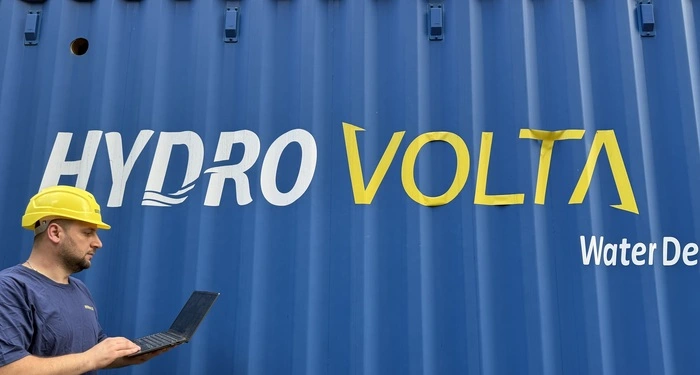
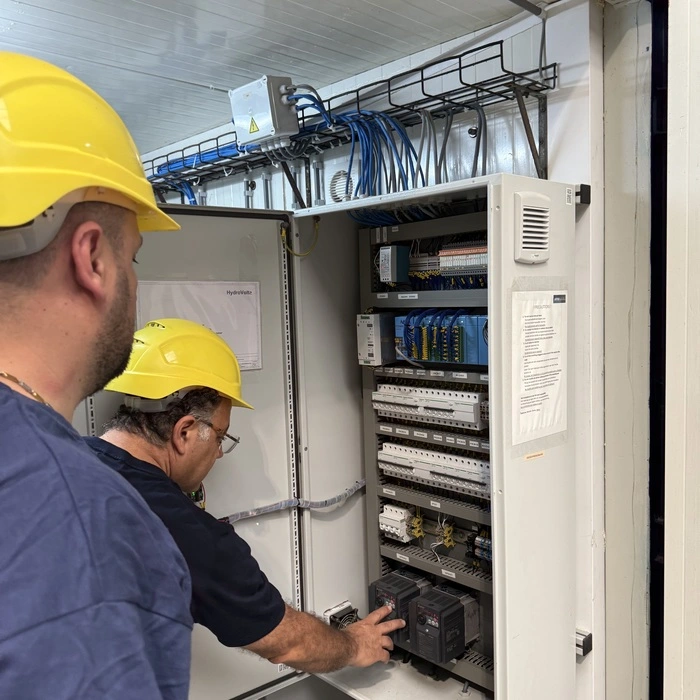
A walkthrough of active Hydrovolta equipment treating brackish groundwater in the field.
TDS, hardness, nitrate, silica, target flow, target use. We assess fit and design the configuration around your specific chemistry.
Institutional partners & backing